How to Lace Dress Shoes: Every Common Method Explained
By Calzature Marche · 30 May 2026 · 9 Min Read · CareGet Free Cheat SheetHow to Lace Dress Shoes the Right Way
Lacing is a small detail that can completely change the look and feel of a dress shoe. The same pair of Oxfords can appear more formal or more relaxed depending on how the laces are threaded, while also affecting fit and comfort. There’s no single correct method—just several classic techniques, each suited to different styles and occasions. Below, you'll find the six most common options and when to use them. For a quick overview, grab the free cheat sheet with all six methods on one printable page→.
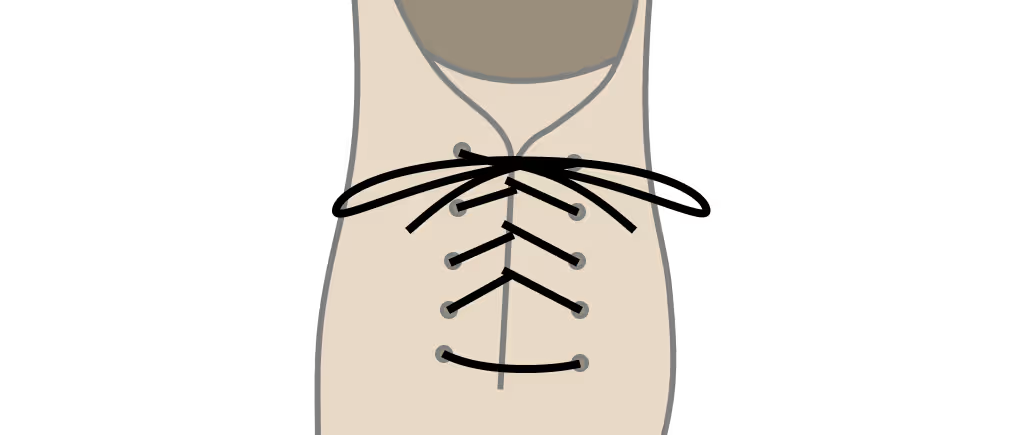
The Criss-Cross Method
A step-by-step guide to criss-cross lacing—the most versatile, everyday way to lace Oxfords and Derbies, with the laces crossing neatly between each pair of eyelets.
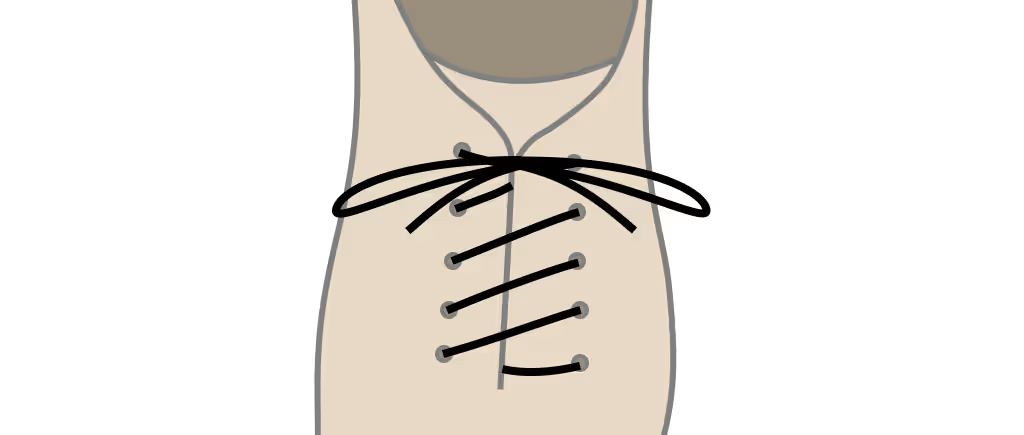
The Diagonal Method
A step-by-step guide to diagonal lacing—a distinctive, asymmetric pattern that sends the laces across the eyelets at a single clean angle for a modern look.
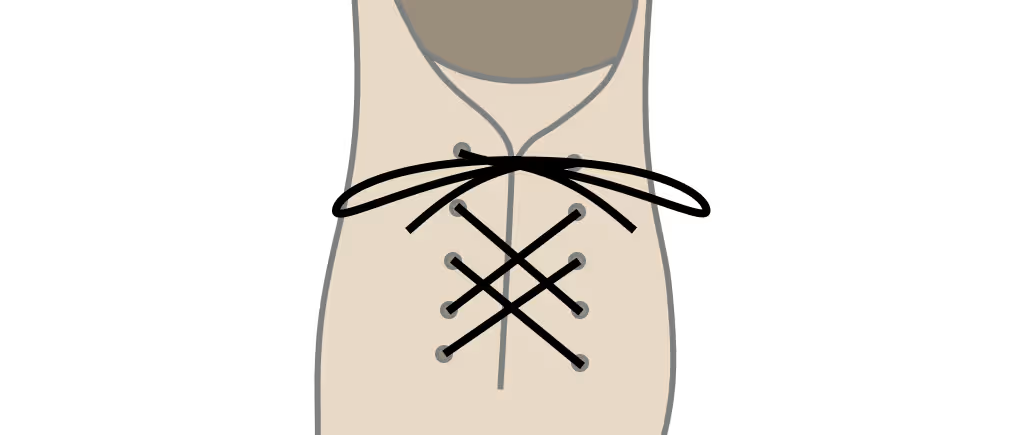
The Lattice Method
A step-by-step guide to lattice lacing—a decorative woven pattern that interlaces the laces into a basket-weave for a striking, statement finish.
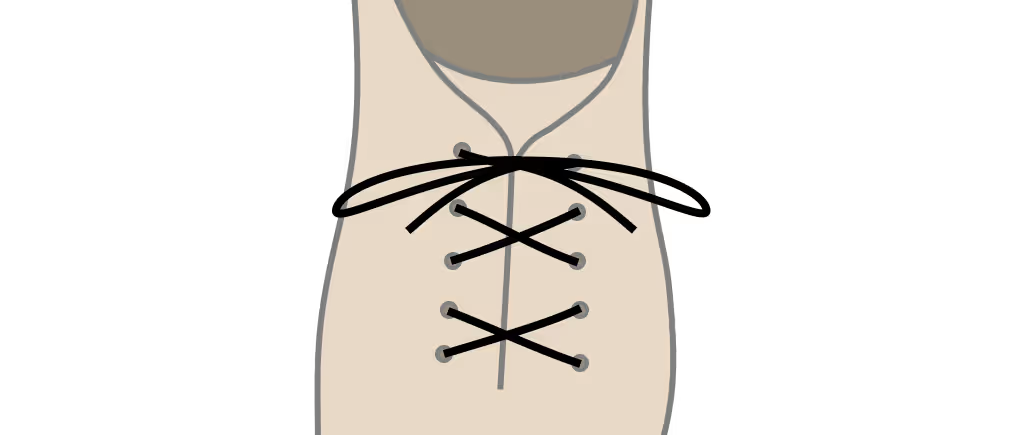
The Over-Under Method
A step-by-step guide to over-under lacing—an efficient, low-friction pattern that alternates over and under the eyelets for a snug fit that stays tied.
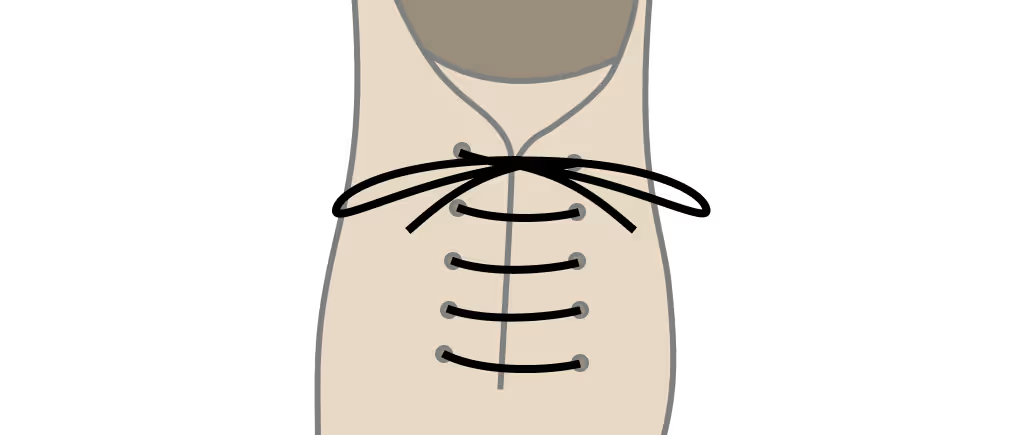
The Straight-Bar Method
A step-by-step guide to straight-bar (ladder) lacing—the clean, parallel look favoured for formal Oxfords, where each lace runs straight across the eyelets.
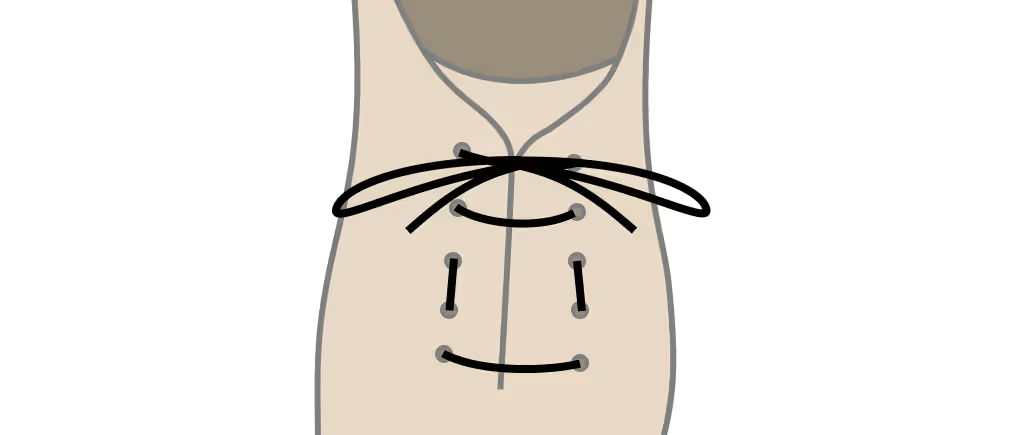
The Vice-Versa Method
A step-by-step guide to vice-versa lacing—a balanced, reversible variation on the criss-cross that keeps both ends even and the front lying perfectly flat.
First, Know Your Shoe: Open vs. Closed Lacing
Before settling on a method, it helps to look at how the eyelet tabs are stitched, because the construction changes what works best.
On a closed-lacing shoe — an Oxford — the eyelet flaps are sewn under the vamp, so they pull tightly together. This is the most formal construction, and it suits clean, geometric patterns best. Straight-bar lacing, for instance, looks at home here precisely because the shoe's silhouette calls for it. The closed flaps also mean the shoe has a limited range of adjustment: it's designed to sit snug and trim, which is part of why an Oxford looks its best on a narrower foot and can feel tight across a higher instep.
On an open-lacing shoe — a Derby or Blucher — the flaps sit on top of the vamp and open outward, giving more room to adjust. This makes them more forgiving on wider feet and high insteps, since the quarters can spread apart to accommodate the foot rather than fighting it. That same flexibility makes them naturally compatible with everyday patterns like criss-cross or over-under, where a little give in the lacing is an advantage rather than a flaw.
A simple rule to carry forward: the more formal the shoe, the flatter and more symmetrical the lacing should look. Decorative or asymmetric patterns belong on relaxed, open-laced styles; the dressier the occasion, the more the lacing should disappear into the shoe.
The Six Ways to Lace Dress Shoes
Criss-Cross Lacing
This is the default, and it earned that status. The laces simply cross diagonally between each pair of eyelets — quick to do, easy to adjust, and equally at home on Oxfords and Derbies. If you only ever learn one method, this is the one. It doesn't call attention to itself, which is exactly what a reliable everyday lacing should do. Because each crossing pulls directly on the eyelets, it also tightens predictably, which makes it easy to fine-tune the fit on the fly.
Best for: any shoe, any occasion · Difficulty: easy · Finished look: balanced diagonal X-pattern
Full tutorial: The Criss-Cross Method →
Straight-Bar Lacing
The most formal lacing of the six. Each lace runs straight across the eyelets, with the diagonal segments tucked underneath so the front of the shoe shows nothing but clean, parallel bars. It's the natural choice for black-tie Oxfords or any occasion where you want the shoe to look sharp and minimal. The geometry is simple, but the effect is unmistakably intentional. It works best on shoes with an even number of eyelet pairs, since an odd count leaves one diagonal showing on the surface — a small detail worth checking before you commit.
Best for: formal Oxfords, black tie · Difficulty: moderate · Finished look: flat, horizontal parallel bars
Full tutorial: The Straight-Bar Method →
Over-Under Lacing
The comfort choice. Over-under alternates each lace over one eyelet then under the next, which reduces friction and lets the laces glide freely. The result is a shoe that cinches more evenly, stays tied longer, and distributes pressure more consistently across the foot. It looks neat and traditional from the outside — only the feel tells the real story. Worth trying before you blame an uncomfortable fit on the shoe itself, since the reduced friction is especially noticeable on stiff new leather that hasn't yet broken in.
Best for: comfort, long days on your feet · Difficulty: moderate · Finished look: clean criss-cross, near-identical to standard
Full tutorial: The Over-Under Method →
Diagonal Lacing
A distinctive, asymmetric pattern that sends the laces across the eyelets at a single consistent angle. It's a subtle way to add visual interest and a contemporary edge without tipping into novelty territory. Works best on a plain shoe where the lacing can do a little of the talking, and it pairs especially well with a contrasting lace colour if you want the line to read clearly across the vamp.
Best for: plain, casual-leaning dress shoes · Difficulty: moderate · Finished look: single clean diagonal line
Full tutorial: The Diagonal Method →
Lattice (Basket-Weave) Lacing
The statement method. Lattice lacing interlaces the laces into a woven basket-weave across the front of the shoe — decorative, eye-catching, and best saved for the moments when you want the footwear to lead the outfit. It takes patience to get right, and it needs more lace than any other method on this list because of all the weaving, so check your length before you start. The result is unlike anything else here, but it's firmly a special-occasion look rather than an everyday one.
Best for: standout, expressive styling · Difficulty: advanced · Finished look: woven basket-weave panel
Full tutorial: The Lattice Method →
Vice-Versa Lacing
A balanced, reversible take on the criss-cross. Vice-versa keeps both lace ends even and the front lying perfectly flat, giving you the familiarity of criss-cross with a cleaner, more deliberate finish. If you've always liked the criss-cross but felt it could sit a little tidier, this is the natural step up. It's an easy upgrade with no real downside, which makes it a good first method to try once you're comfortable with the basics.
Best for: a tidier everyday alternative to criss-cross · Difficulty: easy · Finished look: flat, even, symmetrical crossings
Full tutorial: The Vice-Versa Method →
What About Loafers?
Loafers are the exception that proves the rule. Most are slip-ons with no eyelets at all, so the lacing question never comes up — the fit is set by the leather and the last rather than by how you thread the shoe. Where lacing does appear on a loafer, it's almost always decorative: a lace or leather cord threaded through the saddle or strap purely for looks, not to tighten the shoe. If you own a laced loafer, treat the lace as a styling detail and keep it relaxed and even rather than trying to apply a structured pattern meant for an Oxford or Derby. The formal-to-casual logic still holds: the more relaxed the shoe, the more relaxed the lacing should look.
How Long Should Your Laces Be?
Lace length depends on two things: how many eyelet pairs your shoe has, and which pattern you're using. Longer and woven patterns like lattice eat up more lace, so always size up if you're moving to a more elaborate method. As a starting reference for a standard criss-cross:
| Eyelet pairs | Typical lace length |
|---|---|
| 2–3 pairs | 24 in (≈ 60 cm) |
| 3–4 pairs | 27 in (≈ 69 cm) |
| 4–5 pairs | 30 in (≈ 76 cm) |
| 5–6 pairs | 30–36 in (≈ 76–91 cm) |
| 6–7 pairs | 36–45 in (≈ 91–114 cm) |
These are general guides rather than exact figures — the right length varies a little with eyelet spacing, lace thickness, and the pattern you choose. If you're between sizes, go longer; trimming or double-knotting excess is easier than fighting a lace that's too short.
A Few Things Worth Knowing
Starting with the lace centered through the bottom eyelets keeps both ends finishing at the same length — a simple step that prevents a lopsided bow from undoing an otherwise clean job.
The lace itself matters too. Thin, flat, waxed laces read most formal and suit the cleaner patterns well. Rounder or chunkier laces lean casual, which can work in the right context but will soften the effect of a formal method like straight-bar. Waxed laces also hold a knot better, which is a quiet advantage if your bows tend to work loose during the day.
And if a shoe has never felt properly secure, it's worth trying over-under before assuming it's a fit issue. A change in lacing method often solves what seems like a problem with the shoe.
Frequently Asked Questions
Which lacing method is the most formal? Straight-bar lacing. Its flat, parallel bars and hidden diagonals give the cleanest, most minimal front, which is exactly what a formal Oxford calls for. Criss-cross is a close, slightly less strict second.
Which method is the most comfortable? Over-under. By alternating over and under each eyelet, it reduces friction so the laces glide and the pressure spreads more evenly across the foot — a noticeable difference on long days and on stiff new leather.
Can I use straight-bar lacing on a Derby? You can, but it shows off the open flaps less flatteringly than on an Oxford, and it limits the adjustability that makes a Derby comfortable in the first place. Criss-cross or over-under usually suits open-laced shoes better.
What do I do with too much leftover lace? Re-center the lace so both ends are equal, double-knot the bow, or tuck the surplus down the sides of the tongue. If it's consistently excessive, switch to a shorter lace using the length guide above.
Why do my laces keep coming undone? Smooth, round, synthetic laces slip the most. Switching to flat waxed laces, using a double knot, or moving to over-under lacing (which holds tension better) usually fixes it.
How do I lace a shoe with an odd number of eyelets? Most methods adapt fine, but straight-bar is the fussy one: an odd count leaves a single diagonal visible. Either accept that one bar, choose criss-cross or vice-versa instead, or skip the method on that particular shoe.
Keep Every Method by Your Closet
Want all six techniques in one place? Download the free Shoe Lacing Techniques Cheat Sheet — a printable, one-page guide covering every method step by step, so you can switch styles whenever the occasion calls for it. Get the free cheat sheet here.
A great lacing job deserves a shoe worth lacing. Explore our handcrafted Oxfords, Derbies, and loafers at Calzature Marche.
— Calzature Marche · Marche, Italia
Filed under Care · 30 May 2026